
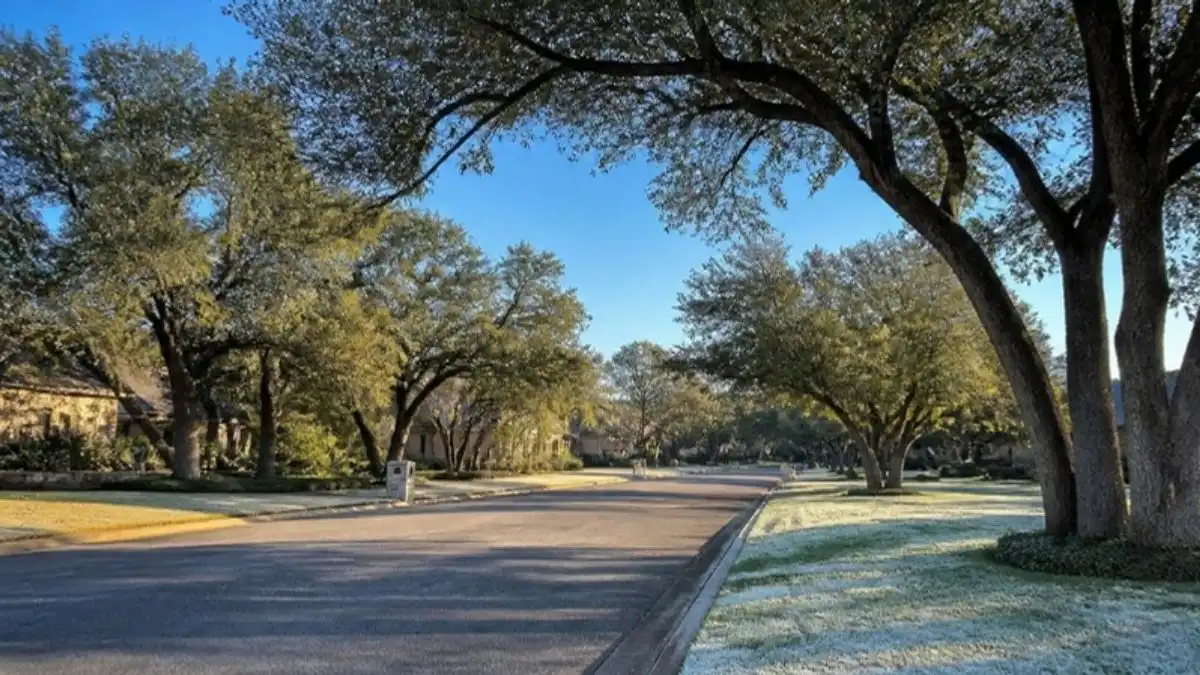
What is winter like in Austin, Texas? Mostly mild and sunny, with normal January highs around 62 degrees and lows around 41. Austin averages about 12 freezes a year, usually between early December and mid-February, and every few years an ice storm reminds everyone that Texas houses aren’t built for real cold. As an Austin real estate agent who grew up with Iowa winters, here’s what to expect and how to get your home ready.
Key takeaways
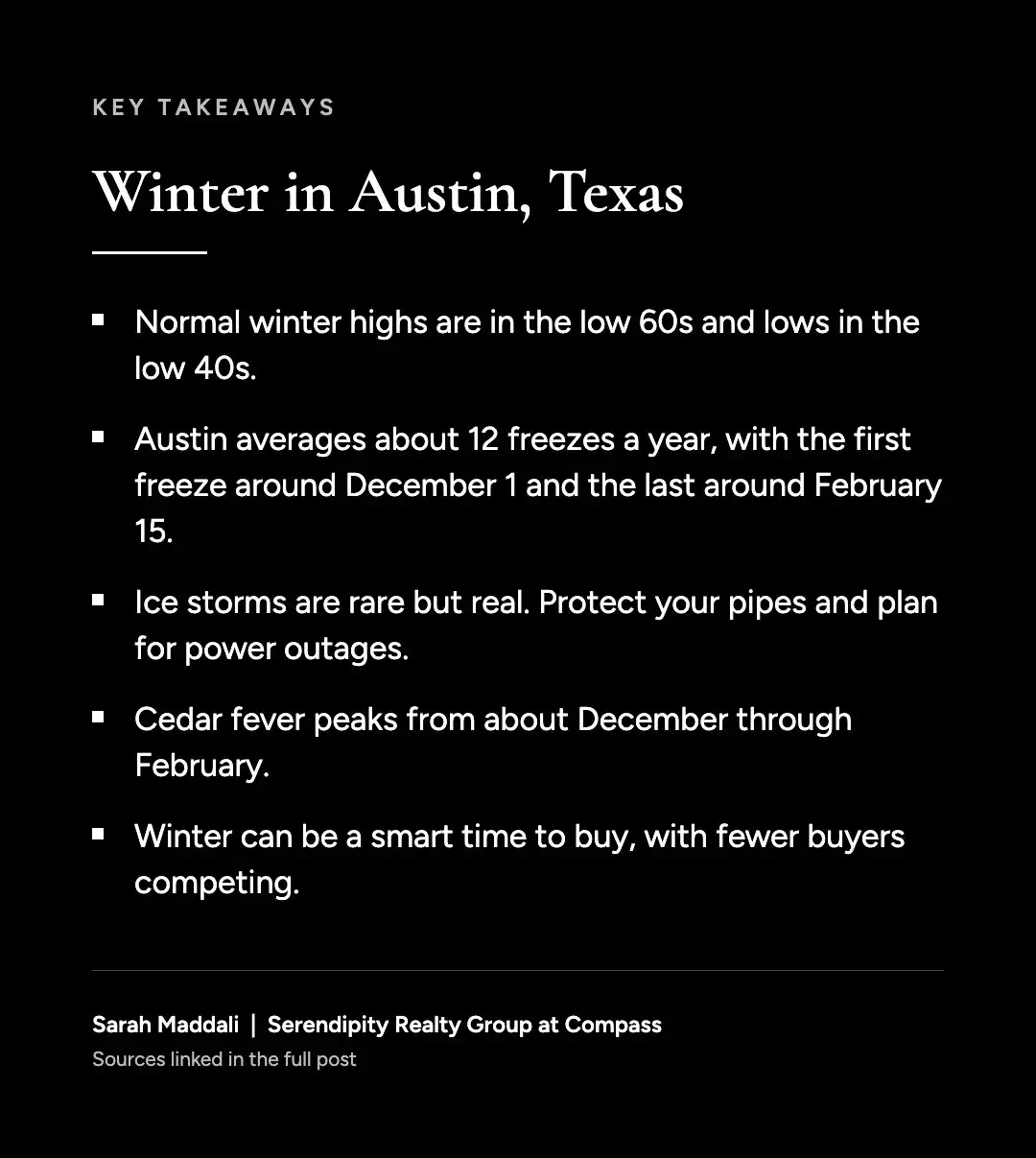
- Normal winter highs are in the low 60s and lows in the low 40s.
- Austin averages about 12 freezes a year, with the first freeze around December 1 and the last around February 15.
- Ice storms are rare but real. Protect your pipes and plan for power outages.
- Cedar fever peaks from about December through February.
- Winter can be a smart time to buy, with fewer buyers competing.
How cold does it get in Austin in winter?
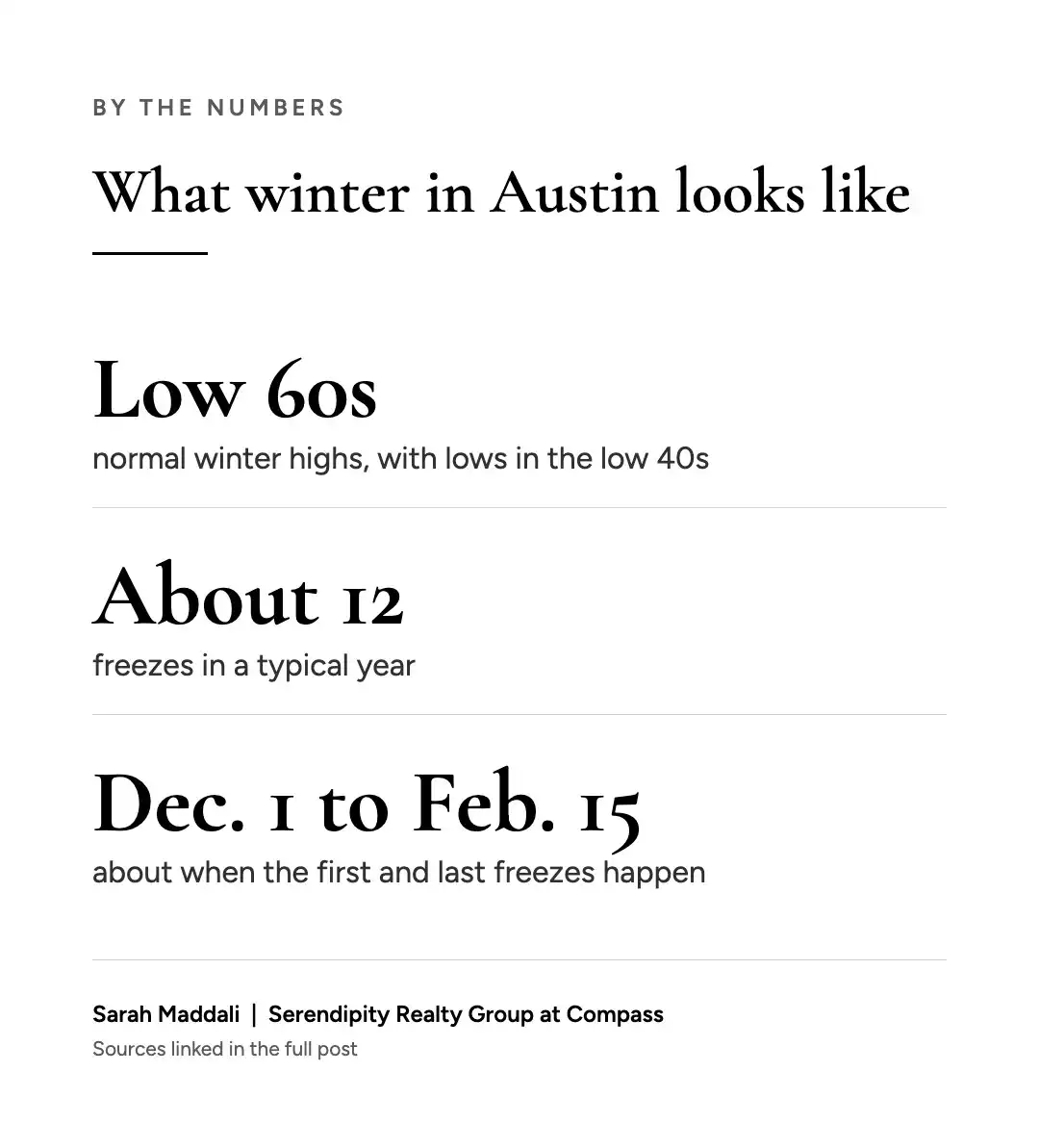
Not very, most days. The coldest stretch of the year runs through mid-January, when the normal high is about 62 degrees and the normal low is about 41 (KXAN). You’ll have plenty of sunny 70-degree days in December and January, and plenty of patio days.
The coldest it’s ever been in Austin? Negative 2 degrees on January 31, 1949 (National Weather Service). Hopefully we never see that again.
How often does Austin freeze?
About 12 times a year. Based on 1991 to 2020 data, the average first freeze is around December 1 and the average last freeze is around February 15 (National Weather Service). Freezes have happened as late as April, so don’t put your tender plants out too early.
Does it snow in Austin?
Rarely, and when it does, the whole city stops. What we get more often is ice, freezing rain and the occasional hard freeze that lasts a few days. Most people here don’t own snow tires, and the roads aren’t treated like they are up north, so a little ice goes a long way. My Iowa self finds this hilarious and also very real.
How cold was your coldest winter? Mine involved a frozen car door in Iowa.
How do you winter-proof a house in Austin?
Texas homes are built for heat, not cold. Pipes often run through attics and exterior walls, and a lot of homes don’t have the insulation northern homes do. Here’s my checklist:
- Cover outdoor faucets with foam covers before the first freeze.
- Insulate exposed pipes, including the ones in the attic and on the pool equipment.
- Drip faucets and open cabinet doors on exterior walls when it drops into the low 20s.
- Know where your main water shutoff is before you need it.
- Shut off and drain your irrigation system, and cover the backflow preventer.
- Have a power outage plan. Flashlights, blankets and charged phones. Many buyers ask about generators after a bad storm. If you’re shopping, ask whether a home has a generator or is wired for one.
- Bring in or cover tender plants when a hard freeze is forecast.
Buying a home this winter? Text WINTER to 563.650.0452 and I’ll send you my winter home-buying checklist, including what to ask about pipes, insulation and generators.
What about cedar fever?
Cedar fever is a winter allergy from mountain cedar (juniper) pollen, and it peaks from about December through February. A lot of people who never had allergies get it after they move here. If you’re relocating in winter, have a plan and talk to your doctor.
Is winter a good time to buy a house in Austin?
It can be. There are usually fewer buyers in the winter, and builders often get more aggressive with incentives near the end of the year. The Austin metro had 5.1 months of inventory in August 2026 (Unlock MLS), so buyers already have room to negotiate. Read my guide to new construction homes in Austin for the year-end deals.
Bonus: shopping in winter shows you how a home handles the cold. Ask about the age of the HVAC, check the attic insulation and look at where the pipes run.
What is there to do in Austin in winter?
Plenty. December brings the Trail of Lights in Zilker Park, holiday markets and lights all over town. Hiking and biking are actually pleasant in winter, and the patios are full on sunny days. Barton Springs stays about 68 degrees year round if you’re brave enough for a winter dip. (I’ll watch from the deck with a coffee.)
How are Austin homes heated?
Most Austin homes are built around air conditioning, and heat is the afterthought. You’ll see electric heat pumps, electric furnaces and gas furnaces, and some older homes still have the original system from when they were built. Here’s what I tell buyers to check:
- The age of the HVAC system. The same unit heats and cools in many homes, so an old system is a summer and winter problem.
- Gas or electric. Ask which one the home uses for heat, water heater and cooking, and look at a year of utility bills if the seller has them.
- Attic insulation. More insulation helps in both July and January.
- Fireplaces. Gas, wood-burning or decorative only? A lot of Texas fireplaces are more about the look than the heat.
- Windows. Older single-pane windows let the cold right in. Newer double-pane windows make a big difference.
None of these are deal breakers. They’re just things to price in, and a good inspection will flag anything that needs attention. Coming from a basement-and-furnace Iowa house, I had to learn all of this the first year. Which kind of heat did you grow up with?
My honest take on winter in Austin
Here’s what I’d actually do. Enjoy the sunny 70-degree December days, because they’re one of the best parts of living here. Then do the boring prep before the first freeze, because a burst pipe ruins a lot more than a weekend. And if you’re house hunting, winter is a sneaky good time to do it. Fewer buyers, motivated builders and you get to see how the house handles the cold.
FAQ
What is winter like in Austin, Texas?
Mostly mild and sunny. Normal January highs are around 62 degrees and lows around 41, with about 12 freezes a year.
Does it snow in Austin, Texas?
Rarely. Austin sees ice and freezing rain more often than snow, and even a little ice can shut down roads.
When is the first freeze in Austin?
The average first freeze is around December 1 and the average last freeze is around February 15, based on 1991 to 2020 data from the National Weather Service.
Do Austin homes need winter prep?
Yes. Cover outdoor faucets, insulate exposed pipes, drain irrigation systems and have a plan for power outages during hard freezes.
Is winter a good time to buy a home in Austin?
Often, yes. Fewer buyers are shopping and builders tend to offer bigger incentives near the end of the year.
Planning a move this winter?
Tell me your timeline and what you’re looking for: fill out my 2-minute buyer questionnaire. Want every neighborhood broken down? Get my free Austin Buyer Guide. Or text me at 563.650.0452. I actually answer!
Connect with Sarah
- Watch Austin home tours on YouTube: https://www.youtube.com/@sarahsellsATX
- Instagram: https://www.instagram.com/sarahsellsatx/
- Facebook: https://www.facebook.com/SarahsellsATX/
- LinkedIn: https://www.linkedin.com/in/sarahmaddali/
- Google reviews: https://share.google/GN08gDCGmLE0XDQZK
- Compass profile: https://www.compass.com/agents/sarah-maddali/
Sarah Maddali, REALTOR® | Serendipity Realty Group at Compass | 563.650.0452
Serendipity Realty Group is a real estate team affiliated with Compass. Equal Housing Opportunity.